

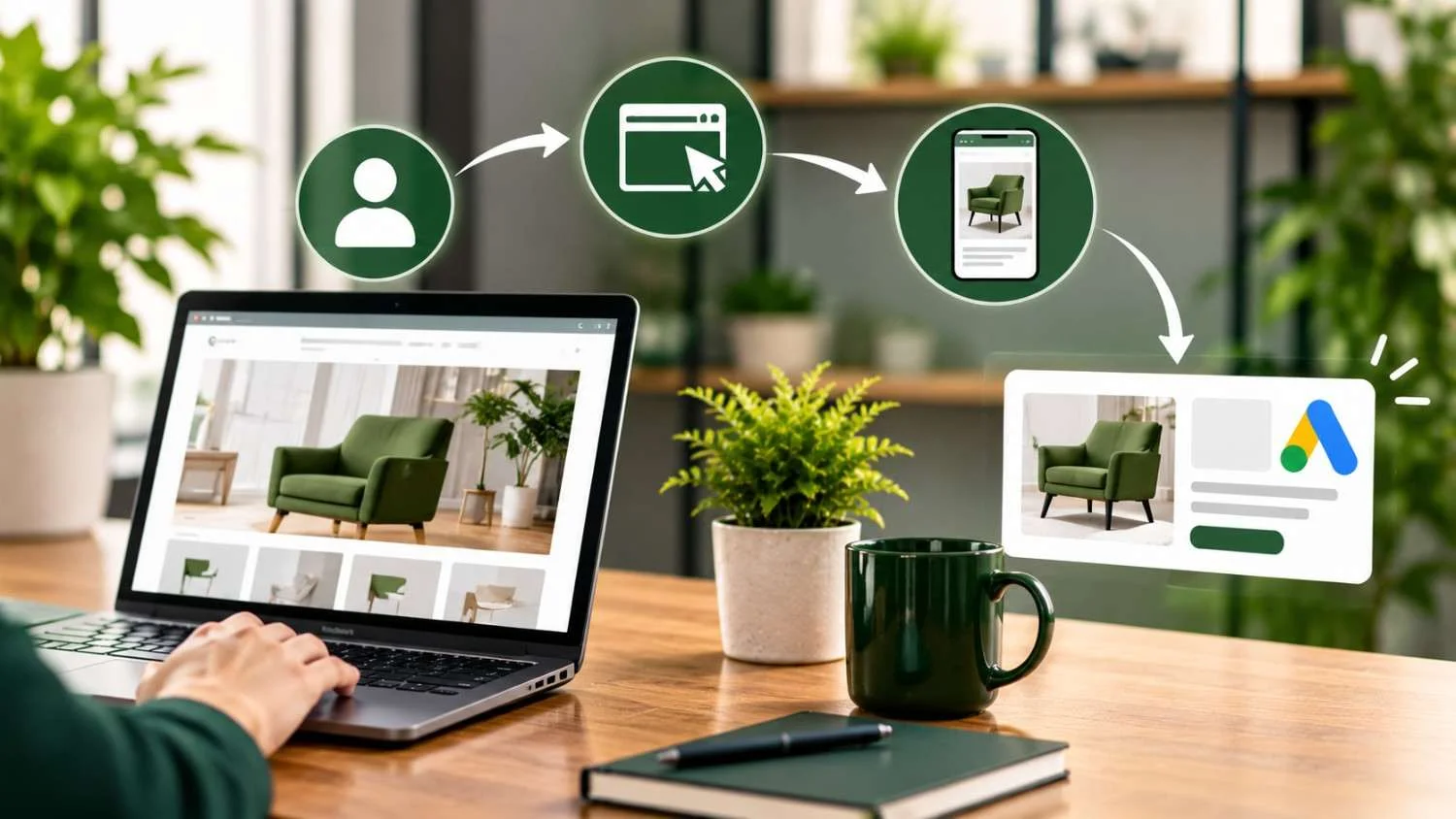
Google Ads remarketing shows targeted ads to people who already visited your website. It keeps your Ohio business visible to warm audiences who left without converting. It works by placing a Google Ads remarketing tag on your site. This tag adds visitors to audience lists. Your ads then follow them across Google Search, the Display Network, YouTube, and Gmail.
Key stats: retargeted visitors are 70% more likely to convert. Remarketing achieves 10x higher click-through rates than standard display ads. For Ohio small businesses, remarketing is the most cost-efficient way to recapture the 95–97% of visitors who leave without taking action.
Most Ohio businesses running Google Ads focus only on new visitors. They write ads for cold audiences who have never heard of them. Meanwhile, they ignore the people who already showed interest.
Think about it. Someone visited your service page. They spent time reading. Then they left without calling. That visitor is valuable. But without remarketing, they are gone forever.
Google Ads remarketing solves this exact problem. It lets your Ohio business keep showing ads to people who already engaged with your brand. These warm audiences convert at far higher rates than cold traffic.
According to retargeting research by Analytify, retargeted visitors are 70% more likely to convert. For Ohio local service businesses with tight ad budgets, that advantage is significant.
For Ohio businesses wanting expert remarketing setup, Richwood Marketing’s Google Ads management services include audience list building, tag installation, and full campaign optimization for Richwood Bank customers across central Ohio.
What Is Remarketing in Google Ads? The Core Concept
Google Ads remarketing (also called retargeting) shows targeted ads to past website visitors. It reaches them across Google Search, the Display Network, YouTube, and Gmail.
The idea is simple. Most visitors do not convert on their first visit. In fact, 95–97% of first-time visitors leave without taking action. Remarketing keeps your business visible while they consider their options.
Remarketing vs. retargeting is there a difference?
No significant difference exists in practice. Google uses “remarketing” for its platform. The broader industry uses “retargeting.” For Google Ads, both terms mean the same thing: showing ads to past visitors.
Are Google Ads still worth it in 2026?
Yes especially with remarketing. Cold search campaigns face rising competition in Ohio. However, remarketing targets pre-qualified audiences. These users already know your business. Therefore, conversion rates stay high even as cold traffic costs rise.
How Does Google Ads Remarketing Work? The Technical Mechanics
How remarketing in Google Ads works comes down to three connected components. First is the tag. Second is the audience list. Third is the campaign.
Component 1: The Google Ads Remarketing Tag
The google ads remarketing tag is a small JavaScript code snippet. You install it on every page of your Ohio business website. When a visitor lands on your site, the tag fires immediately. It places a cookie in their browser. That cookie adds them to a remarketing audience list inside your Google Ads account.
Two installation methods exist:
- Directly in HTML: Paste the tag code into your website’s <head> section on every page.
- Via Google Tag Manager (recommended): Add the remarketing tag in GTM. It fires across your whole site without direct code edits.
Google Ads conversion tracking with Google Tag Manager can be set up at the same time. As a result, you track both who visited and who converted through one system. This simplifies reporting significantly.
Component 2: The Audience List
Once the google ads remarketing tag is live, Google builds audience lists automatically. You can create segments based on visitor behavior. For example:
- All website visitors everyone who visited any page in the last 30–540 days
- Specific page visitors people who viewed your services, pricing, or contact page
- Time-on-site segments visitors who spent significant time on your site
- Non-converters visitors who did NOT submit a form or call (your most important audience)
- Existing customers uploaded via Customer Match to re-engage past clients
Important: Minimum audience size is 100 users for Display and 1,000 for Search. Ohio businesses with lower traffic may need 30–90 days to build sufficient audience size.
Component 3: The Campaign
With an audience list built, you create a remarketing campaign in Google Ads. This campaign serves ads specifically to that list. You choose the network: Display, Search, YouTube, or Gmail. Critically, your messaging must differ from cold traffic ads. You are speaking to a warm audience. They already know your Ohio business.
The 6 Types of Google Ads Remarketing Which One Fits Your Ohio Business?
Understanding remarketing types is essential to setting up a remarketing strategy that fits your goals. Here is a clear comparison:
| Remarketing Type | How It Works | Best For | Ohio Example |
| Standard Remarketing | Display ads to past website visitors | Re-engaging non-converters | Ohio HVAC company showing ads to service page visitors |
| Dynamic Remarketing | Personalized ads showing specific services viewed | E-commerce and multi-service businesses | Ohio retailer showing exact product browsed |
| Search Remarketing (RLSA) | Adjusts Search bids for past visitors | Bidding more for warm Search audiences | Bidding 50% higher for visitors searching “HVAC Marysville Ohio” |
| Video Remarketing | YouTube ads to past video viewers | Businesses with YouTube content | Ohio agency retargeting video viewers |
| Customer Match | Ads to uploaded email list | Re-engaging existing customers | Richwood Bank customers receiving seasonal promotion ads |
| Similar Audiences | Ads to users resembling your best customers | Prospecting lookalike audiences | Ohio contractor reaching homeowners like past clients |
Starting recommendation for Ohio small businesses: Combine Standard Display Remarketing with RLSA. These two types cover the highest-impact use cases at manageable setup complexity.
How to Set Up Google Ads Remarketing Step-by-Step for Ohio Small Businesses
How to set up google ads remarketing involves five clear steps. Follow each one in order for the best results.
Step 1: Install the Google Ads Remarketing Tag
Go to Google Ads → Tools → Audience Manager → Audience Sources → Google Ads Tag. Click “Set up tag.” Select “Collect general website visit data only” for a standard setup.
To install via Google Tag Manager:
- Create a new tag in GTM → select “Google Ads Remarketing”
- Enter your Google Ads Conversion ID from your Ads account
- Set the trigger to “All Pages”
- Preview and test the container
- Publish when confirmed working
Verify the tag with Google Tag Assistant (Chrome extension). Confirm it fires on every page before moving forward.
Step 2: Create Your Audience Lists
Go to Google Ads Audience Manager. Create these three core lists to start:
List 1 All Website Visitors (30 days): Your broadest remarketing audience. Good for general brand visibility campaigns.
List 2 Service Page Visitors (60 days): People who viewed specific service pages. Higher intent than general visitors.
List 3 Non-Converters (90 days): Visitors who did NOT reach your thank-you page. This is your highest-priority audience. These people showed interest but hesitated.
Step 3: Wait for Lists to Populate
Remarketing lists need time to build. Display requires 100 users minimum. Search requires 1,000 users. For Ohio businesses with 200–500 monthly visitors, allow 2–4 weeks before launching campaigns.
Step 4: Build Your Remarketing Campaign
In Google Ads, create a new Display or Search campaign. Select your remarketing audience in the “Audiences” section. For Display, set targeting to “Targeting” show ads only to list members. For RLSA, set to “Observation” adjust bids for list members but show ads broadly.
Step 5: Write Remarketing-Specific Ad Copy
Your remarketing ads must speak to warm audiences differently. Address the hesitation that prevented their first conversion. Here are four proven approaches for Ohio local service businesses:
- Urgency: “Still looking for an Ohio SEO agency? Let’s talk this week.”
- Reassurance: “Free initial consultation no commitment required.”
- Social proof: “Join 50+ Ohio businesses already growing with Richwood Marketing.”
- Specific offer: “Mention this ad for a free website audit.”
Setting Up a Remarketing Strategy That Converts Three Advanced Tactics
Basic setup gets campaigns live. However, advanced tactics are what make them consistently profitable. Here are three refinements every Ohio business should apply.
Frequency capping: Limit how often each user sees your ads. The recommended cap is 3–5 impressions per day for Display. Over-exposure causes ad fatigue. This is especially important in tight-knit Ohio communities where people notice repeated ads.
Audience exclusions: Always exclude people who already converted. Remove them from “non-converter” campaigns immediately after they submit a form or call. Showing acquisition ads to existing customers wastes budget and creates a poor experience.
Time-window segmentation: Create separate lists for 7-day, 30-day, and 90-day windows. Recent visitors are warmer. Therefore, bid more aggressively for the 7-day window. Reduce bids as the recency gap grows.
EEAT Signal: How Richwood Marketing Applies Remarketing for Ohio Clients
At Richwood Marketing, google ads remarketing is one of the first additions we recommend to Richwood Bank business customers. We serve businesses across Marysville, Delaware, Bellefontaine, Marion, Plain City, Urbana, Springfield, and Richwood.
The pattern we see consistently is predictable. Ohio businesses invest in Google Search campaigns and drive traffic. But they have no follow-up system for the 95%+ who leave without converting. Adding a properly structured remarketing campaign typically reduces effective cost-per-lead within 60–90 days. It recaptures warm traffic that was already paid for.
Furthermore, Ohio local markets are relationship-driven. A Marysville homeowner who visited your website three times is interested but cautious. Remarketing keeps your business visible during that consideration period without increasing cold traffic spend.
According to Google’s official remarketing documentation, campaigns using audience segmentation and exclusions consistently outperform cold audience campaigns on both conversion rate and cost-per-acquisition.
For businesses also working on SEO alongside paid ads, our related guide on how to do keyword research for SEO because combining organic and paid strategy produces the strongest overall results for Ohio small businesses.
Richwood Marketing’s full digital marketing services including Google Ads, SEO, content marketing, and local citations to see how remarketing fits a complete Ohio marketing strategy.
Recommendation Block: Remarketing Strategy by Ohio Business Type
| Ohio Business Type | Best Remarketing Type | Audience Window | Key Ad Message |
| Home services (HVAC, plumbing) | Standard Display + RLSA | 30–90 days | Seasonal urgency + free estimate |
| Professional services (legal, financial) | RLSA + Customer Match | 60–180 days | Trust signals + free consultation |
| Healthcare / dental | Standard Display | 30–60 days | Appointment availability + easy booking |
| Retail / product business | Dynamic Remarketing | 14–30 days | Exact product viewed + discount |
| Marketing / business services | RLSA + Video Remarketing | 60–90 days | Ohio case study results + proof |
| Restaurant / food service | Standard Display | 7–14 days | Current specials + location proximity |
| Agricultural / farm business | Customer Match + Standard | Seasonal windows | Seasonal service reminders |
| B2B / contractor services | RLSA + Customer Match | 90–180 days | Long-form trust content + case studies |
Frequently Asked Questions
What is remarketing in Google Ads?
Google Ads remarketing shows targeted ads to people who previously visited your website. It reaches them across Google Search, the Display Network, YouTube, and Gmail. It works by installing a remarketing tag that builds audience lists. Campaigns then target those lists specifically. Remarketing consistently outperforms cold audience campaigns because it reaches people who already know your business.
Can you retarget with Google Ads?
Yes. Google Ads supports six retargeting methods. These include Standard Remarketing (Display ads to past visitors), RLSA (adjusted Search bids for past visitors), Dynamic Remarketing (personalized service or product ads), Video Remarketing (YouTube ads to past viewers), Customer Match (ads to your email list), and Similar Audiences (lookalike prospecting). Each type serves a different stage of the customer journey.
How do I set up Google Ads remarketing?
Install the remarketing tag via Google Tag Manager on every page. Create audience lists in Audience Manager start with all visitors, service page visitors, and non-converters. Wait for minimum list sizes (100 for Display, 1,000 for Search). Then build Display or Search campaigns targeting those audiences. Finally, write ad copy specifically for warm audiences, not cold traffic.
What is a Google Ads remarketing tag?
The Google Ads remarketing tag is a JavaScript tracking snippet. Place it on every page of your website. When a visitor arrives, the tag fires and adds them to your audience lists. Install it directly in your HTML <head> or via Google Tag Manager. GTM is the recommended approach for most Ohio small businesses managing multiple tracking tags.
How does remarketing differ from regular display advertising?
Regular display advertising targets cold audiences using demographics or interests. Remarketing targets warm audiences who already visited your site. The difference in results is significant. Remarketing achieves 10x higher click-through rates. It also produces lower cost-per-conversion because the audience already has existing awareness of your business.
How much does Google Ads remarketing cost?
Display Network remarketing typically costs 0.25–1.50 per click. That is significantly lower than competitive Ohio Search keywords at 2–10+ per click. RLSA uses your existing Search budget with bid adjustments. For most Ohio businesses, adding remarketing requires no additional budget increase. It simply extracts more value from the cold traffic budget already being spent.
Are Google Ads still worth it for Ohio small businesses in 2026?
Yes. Remarketing is a primary reason why. Cold search costs are rising in competitive Ohio markets. However, remarketing targets audiences that already showed interest. As a result, it maintains strong ROI even as cold traffic costs increase. The combination of Search for acquisition and remarketing for conversion produces the best full-funnel performance for Ohio local service businesses.
Conclusion: Stop Losing Warm Leads Start Google Ads Remarketing Today
Google Ads remarketing is not a luxury for large budgets. It is a necessary system for any Ohio business already driving website traffic. Without it, 95% of your visitors simply leave and find a competitor. Those visitors already found you. They already showed interest. Remarketing gives you the follow-up mechanism to close that gap.
Setup is straightforward. The tag takes under an hour to install via Google Tag Manager. Audience lists build automatically. Campaigns can go live within 2–4 weeks. After that, every new visitor to your Ohio business website also feeds your remarketing pool compounding the value of every cold traffic dollar you spend.
Set up remarketing with us at Richwood Marketing our Google Ads team installs your tag, builds your audience segments, structures your first campaigns, and optimizes bids to convert the warm Ohio audiences your current campaigns are leaving behind.
